Rigor, applied to the unexplained.
Welstan University is a private liberal arts university where the methods of a research institution — primary sources, replication, peer review — are brought to bear on phenomena that conventional scholarship has long left unexamined.
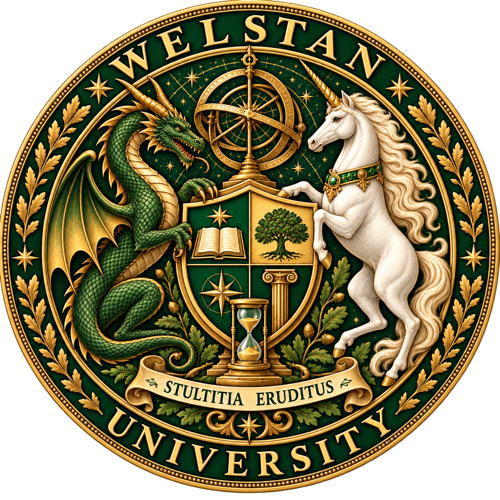
“Stultitia Eruditus”Wisdom beyond reason — literally, "an educated foolishness," worn as a badge, not an insult.
A young university, an old question
Welstan was founded on a simple premise: that the liberal arts tradition of disciplined, evidence-weighing inquiry had largely stopped asking questions about the anomalous, the folkloric, and the physically inexplicable — ceding that territory to entertainment on one side and to credulity on the other. Welstan exists to bring the standards of a research university back to that territory: primary sources, controlled methodology, peer review, and the discomfort of an honestly inconclusive result.
"We do not promise that the unexplained will become explained. We promise only to study it as carefully as we would study anything else."
The university was endowed in 2011 by Augustus P. Welstan, a Maryland-based instrument-maker and cartographer whose family fortune came from maritime navigation equipment. Mr. Welstan donated his personal collection of contested artifacts and case files — accumulated over four decades of amateur field investigation — to serve as the founding core of what is now the Vaneris Library's Special Collections.
Every Welstan student, regardless of eventual concentration, completes the Founding Curriculum: two years of coursework spanning language and literature, history, mathematics, natural science, and philosophy, before declaring a major within either the College of Arts & Sciences or the Institute for Speculative & Anomalous Studies.
- 2011Chartered by the State of Maryland; Ashgrove Hall opens as the university's first building.
- 2012The first undergraduate class, 214 students, matriculates.
- 2013The Institute for Speculative & Anomalous Studies is chartered as Welstan's second college.
- 2015The Vaneris Library is completed; its Special Collections open to visiting researchers.
- 2017Welstan confers its first doctoral degree, a Ph.D. in Sacred Geometry.
- 2019Thistlewood Observatory is dedicated on the university's north ridge.
- 2021Regional accreditation is affirmed following the university's decennial review.
- 2024The Center for Cryptid Field Studies opens in partnership with the Department of Cryptozoology.
Two colleges, one standard of evidence
Welstan confers degrees through the College of Arts & Sciences and the Institute for Speculative & Anomalous Studies (ISAS). Every ISAS concentration is built on the same methodological spine as its traditional counterpart: literature review, hypothesis, controlled observation, and defense.
College of Arts & Sciences — the university's founding college, offering the classical liberal arts core all Welstan students share.
Institute for Speculative & Anomalous Studies — nine departments applying research-university methodology to phenomena outside the conventional canon.
Forbidden Archaeology
Contested prehistory, anomalous artifacts, and the historiography of suppressed excavation.
Not offered at this level.
Ufology
The history, sociology, and investigative methodology of unidentified aerial phenomena.
Not offered at this level.
Cryptozoology
Field methods for the study of undiscovered, presumed-extinct, and disputed fauna.
Not offered at this level.
Extrasensory Perception
Experimental design for the study of anomalous cognition and psi phenomena.
Not offered at this level.
Supernatural Investigation
Applied field methodology: instrumentation, case documentation, and investigative ethics.
Not offered at this level.
Multiverse Physics
Theoretical physics of parallel universes, the many-worlds interpretation, and quantum foundations.
Not offered at this level.
Sacred Geometry
The mathematics of pattern across mysticism, architecture, and art history.
Not offered at this level.
Alchemical & Esoteric Sciences
Historical and experimental study of alchemical, hermetic, and divinatory systems of knowledge.
Not offered at this level.
Comparative Mythology & Folklore
Cross-cultural analysis of myth, legend, and oral tradition as historical evidence.
Not offered at this level.
Scholars who take the questions seriously
Welstan's faculty publish in both conventional and specialist venues, and hold the same terminal degrees expected of any research university faculty.
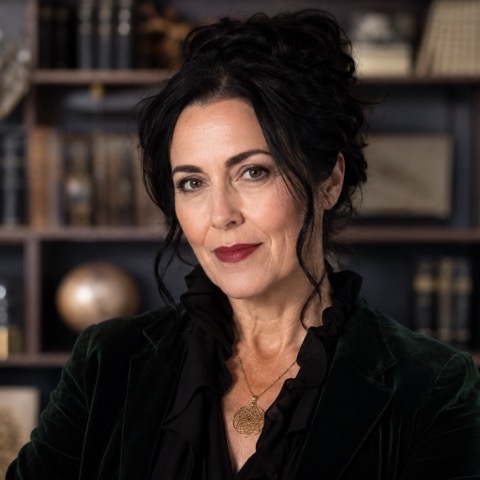
Dr. Imogen Faircastle
Studies the mathematics of medieval labyrinth design and its recurrence in unrelated architectural traditions.
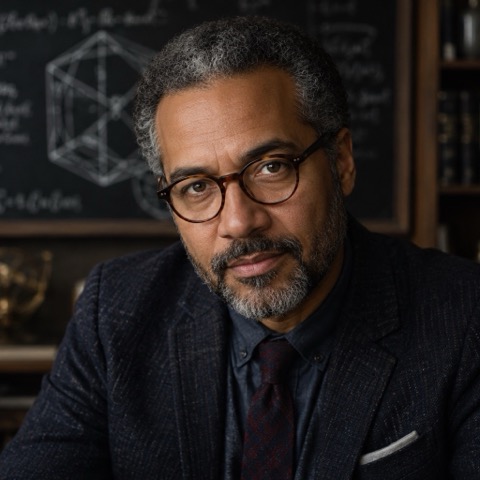
Dr. Desmond Okonkwo-Reyes
Works on decoherence, the measurement problem, and the observational consequences of many-worlds formalisms.
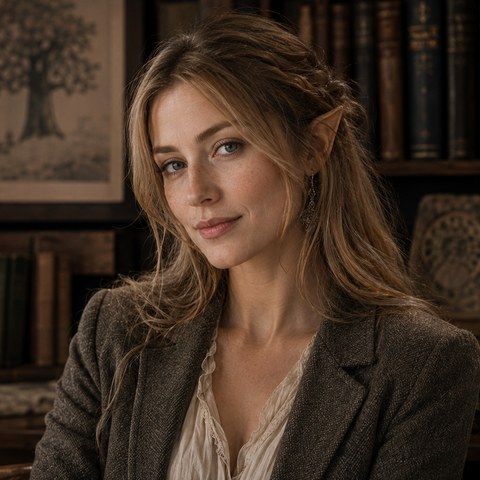
Dr. Anneke Solheim
Works on flood narratives, oral-formulaic composition, and the structural analysis of myth across cultures.
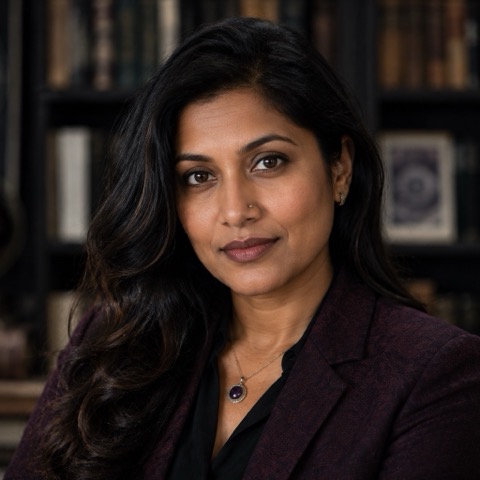
Dr. Priya Nandakumar
Specializes in meta-analytic methods applied to psi replication studies and pre-registration standards for the field.
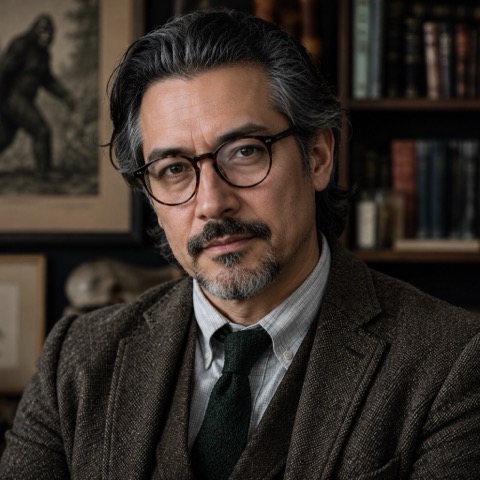
Dr. Harlan Bloodworth-Kim
Builds population models for undocumented large-mammal candidates from sparse and indirect field evidence.
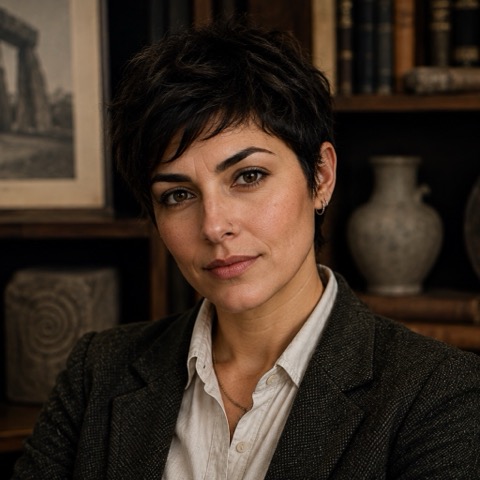
Dr. Odette Chalfont
Investigates dating disputes at megalithic sites and the historiography of excavation suppression.
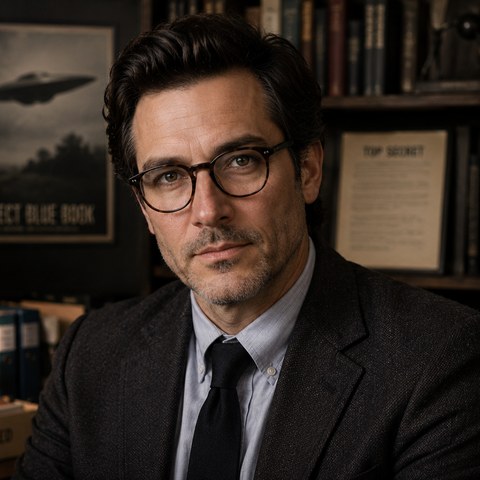
Dr. Everett Quinn
Studies the declassified-document record of government UAP programs, from Project Blue Book to the present.
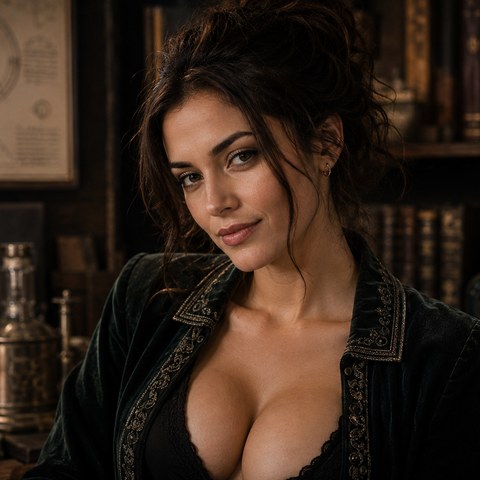
Dr. Petra Linden-Ochoa
Pairs manuscript and paleography work with hands-on reconstruction of early modern laboratory chemistry.
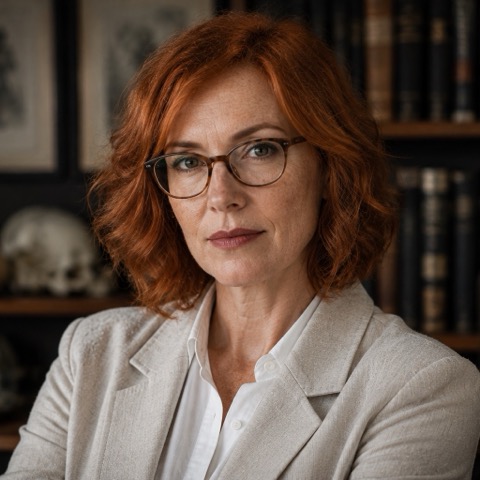
Prof. Marguerite Voss
Develops instrumentation standards for field electromagnetic anomaly detection and chain-of-custody protocols.
A campus in the Catoctin foothills
Welstan's 340-acre campus sits in the wooded hills outside Thornmere, Maryland, roughly equidistant from Washington, D.C., and Baltimore. The Sundial Quad anchors a campus of stone and slate halls, connected by a trail system students call the Hollow.
More than thirty student organizations meet regularly, alongside NCAA Division III athletics — Welstan competes as the Drakes.
- Ashgrove HallAdministration & admissions
- Vaneris LibraryThe Archive — main library & Special Collections
- Thistlewood ObservatoryNorth ridge, dedicated 2019
- Reeve HallISAS teaching & field laboratories
- Sundial QuadCentral green & commencement lawn
- Center for Cryptid Field StudiesEst. 2024, with Cryptozoology
- The HollowCampus trail system, 4.2 miles
Applying to Welstan
Welstan reviews applications holistically, weighing academic record, writing, and — for ISAS applicants — evidence of methodical curiosity over prior belief.
- Common Application or the Welstan Application
- Official transcripts and school report
- Two letters of recommendation
- Standardized testing optional
- Portfolio required for Studio Art applicants
- Interview recommended for ISAS applicants
"Describe a phenomenon you have observed but cannot fully explain, and how you would begin to study it rigorously."
— Required supplemental essay, 500 words
- Acceptance rate
- 8%
- Early Decision
- Nov 1
- Regular Decision
- Jan 15
- Tuition, 2026–27
- $64,900
- Financial aid
- Meets 100% need
- Enrolled last cycle
- 612